


TL;DR:
- Successfully closing a business sale involves meticulous coordination of legal documents, third-party approvals, and accurate funds transfer. Key steps include early approval management, detailed checklists, and thorough communication among all parties. Proper preparation and project-driven execution significantly reduce the risk of delays and deal failure.
Closing a business sale deal is defined as the final process of transferring ownership, funds, and operational control from seller to buyer through a set of legally binding agreements. The industry term for this process is “deal closing” or “transaction closing,” and it covers far more than signing a single document. You need to coordinate the Asset Purchase Agreement (APA), payoff letters, third-party consents, and funds flow statements simultaneously. Miss one piece, and the entire deal can stall or collapse. This guide gives you a project-based framework to finalize your sale agreement on time and at maximum value.
What documents do you need to close a business sale deal?
The APA is the center of gravity for every business sale transaction. According to deal attorneys at SMB.co, the APA allocates deal risk and defines every condition that must be satisfied before closing, including third-party consents and financing contingencies. Getting this document right is not optional. A single undefined term in the APA can trigger disputes that push your closing date back by weeks.
Beyond the APA, you need a complete document package before you can finalize the sale agreement. Here are the core documents every seller must prepare:
- Bill of Sale: Transfers specific assets from seller to buyer and serves as the legal record of what changed hands.
- Assignment and Assumption Agreement: Moves contracts, leases, and liabilities from the seller’s name to the buyer’s.
- Non-Compete Agreement: Prevents you from opening a competing business for a defined period after closing.
- Transition Services Agreement: Outlines your post-close support obligations, such as training the buyer for 30–90 days.
- Payoff and Estoppel Letters: Confirm the exact amounts owed on loans, leases, and liens so buyers and lenders know what gets paid at closing.
Each document must be reviewed, negotiated, and executed with precision. A missing signature page or an outdated payoff figure can freeze wire transfers on closing day.
Pro Tip: Ask your attorney to build a document tracker spreadsheet with each agreement, the responsible party, and a due date. Review it weekly in the 60 days before closing.
How do you manage third-party approvals before closing?
Pre-closing audits of consents and lien searches prevent last-minute surprises that derail otherwise solid deals. Third-party approvals are the most underestimated part of the closing process. Sellers routinely discover that their landlord, a key vendor, or a licensing authority requires weeks of lead time to grant consent. Starting this process late is one of the most common reasons deals miss their target closing date.
Follow these steps to manage approvals without losing momentum:
- Audit every contract on day one. Pull every lease, vendor agreement, customer contract, and license. Flag any clause that requires consent to assign or transfer.
- Notify your landlord immediately. Lease assignment approval from a landlord can take 30–60 days. Send a formal written request as soon as the deal is under letter of intent.
- Contact key vendors and customers. Some supply agreements and customer contracts include change-of-control clauses. Identify them early and begin the consent process in parallel with due diligence.
- Verify all licenses and permits. Business licenses, professional certifications, and state permits often do not transfer automatically. Confirm which ones require a new application in the buyer’s name.
- Coordinate employee agreements. If key employees have non-solicitation or confidentiality agreements, confirm they remain enforceable post-close or negotiate new agreements with the buyer.
- Set hard deadlines for each consent. Assign a team member or your broker to follow up weekly. A consent request with no deadline will sit in someone’s inbox indefinitely.
Missing a single required consent can give the buyer grounds to walk away or renegotiate price. Treat every approval as a critical path item, not an afterthought.
What steps ensure smooth funds flow at closing?

Accurate funds flow statements and verified payoff letters are the two most important financial controls in any business sale closing. The funds flow memo is a single document that shows every dollar moving at closing: the purchase price, seller proceeds, loan payoffs, broker fees, escrow holdbacks, and adjustments for working capital. Every party, including the buyer, seller, lender, and escrow agent, must review and approve this memo before closing day.
| Payment Item | Who Pays | Who Receives | Timing |
|---|---|---|---|
| Purchase price | Buyer | Escrow or seller | At closing |
| Loan payoff | Escrow agent | Seller’s lender | Same day as closing |
| Broker commission | Seller (from proceeds) | Brokerage firm | At or after closing |
| Working capital adjustment | Buyer or seller | Opposing party | Post-close true-up |
| Escrow holdback | Buyer | Held in escrow | Released per agreement terms |
Working capital adjustments are a frequent source of last-minute disputes. The purchase price is often set based on a target working capital level. If the actual working capital at closing differs from that target, one party owes the other a payment. Reconcile this figure at least five business days before closing, not on closing day itself.
Pro Tip: Do a dry run of all wire transfers 48 hours before closing. Confirm account numbers, routing numbers, and wire amounts with every receiving party. Wire fraud targeting business sale transactions is a real and growing risk.
Proper cash flow management in the weeks before closing also matters. Sellers who let receivables slip or run up unusual payables in the final stretch create working capital shortfalls that reduce their net proceeds at the table.
How do you coordinate closing day for a successful handover?
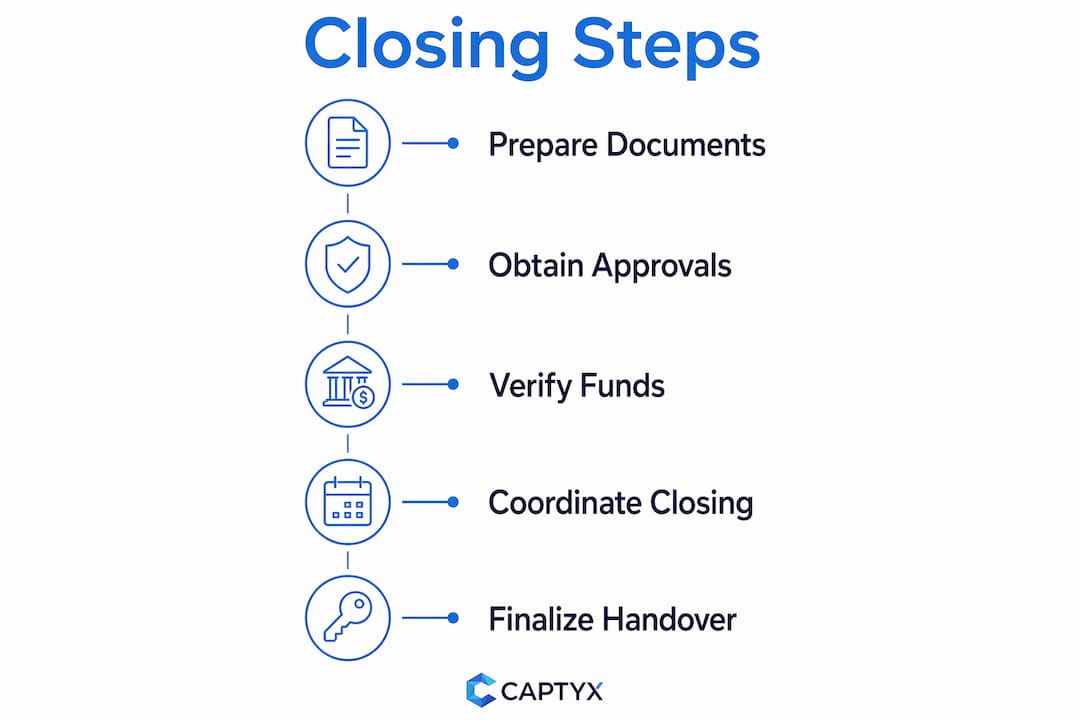
Closing day includes signing, wiring funds, delivering keys and access, and documenting a post-close transition plan. Treat it as a project with a run of show, not a casual meeting. Every task needs an assigned owner and a confirmed time.
Here is what a well-run closing day looks like in practice:
- Confirm all documents are pre-signed or ready for wet signatures. Remote closings are common, so verify that DocuSign or similar platforms are set up and tested in advance.
- Verify wire confirmation before releasing anything. Do not hand over keys, credentials, or access until funds are confirmed received in escrow or your account.
- Perform a final inventory count and walkthrough. If the sale includes physical assets, complete this the morning of closing and document any discrepancies in writing.
- Transfer all digital access. This includes website logins, software licenses, social media accounts, banking credentials, and any cloud-based systems the buyer needs to operate immediately.
- Deliver a post-close punch list. This is a written list of remaining transition tasks, such as customer introductions, vendor notifications, and employee briefings, with assigned deadlines.
- Sign and date every document in the correct order. Your attorney should sequence the signings so that no document takes effect before the funds are confirmed.
A disciplined closing checklist with named owners and due dates reduces deal breakage risk and surfaces problems early enough to fix them. Think of closing day as the final exam. All the studying happens in the weeks before.
What mistakes cause closing delays and how do you avoid them?
Most closing delays stem from operational and documentation issues, not from disagreements over price. That finding should change how you prepare. Sellers who focus all their energy on negotiating a sale price and ignore the operational checklist are the ones who end up with a blown closing date.
“Disciplining closing procedures with checklists and early issue resolution prevents costly closing-day conflicts.” — Captyx, 7 Business Sale Mistakes That Cost Millions
The four most common deal-killing mistakes are:
Working capital disputes resolved too late. Buyers and sellers often disagree on what counts as working capital. Define the calculation method in the APA and run a preliminary working capital statement 30 days before closing.
Missing payoff and estoppel letters. Lenders and landlords do not always respond quickly. Request these letters at least three weeks before your target closing date. Follow up every five business days.
Third-party consents obtained too late. As covered earlier, landlord and vendor approvals take time. If you wait until the final two weeks, you will almost certainly miss your date.
Uncoordinated document preparation. When your attorney, accountant, and broker are not communicating on the same timeline, documents arrive out of sequence or with errors. Hold a weekly closing call with your full advisory team in the final 45 days. Sellers who avoid these common mistakes close faster and with fewer price concessions.
Key takeaways
Closing a business sale deal requires treating every document, approval, and financial transfer as a project task with a named owner and a hard deadline.
| Point | Details |
|---|---|
| APA is the foundation | The Asset Purchase Agreement defines all closing conditions and must be finalized before any other document is executed. |
| Start approvals early | Landlord, vendor, and license consents can take 30–60 days; begin the process at letter of intent, not at closing week. |
| Verify funds flow in advance | Review the funds flow memo with all parties and run a wire transfer dry run 48 hours before closing day. |
| Treat closing day as a project | Assign every task an owner and a time; do not release keys or access until wire confirmation is received. |
| Audit early to avoid delays | Working capital disputes and missing payoff letters cause most closing failures; reconcile both at least 30 days out. |
What i’ve learned after watching dozens of deals close and fall apart
After working through more business sale closings than I can count, the pattern is always the same. The deals that close cleanly are the ones where the seller treated the process like a project manager, not a participant. They had a checklist. They had deadlines. They had a weekly call with their attorney, accountant, and broker. The deals that fell apart or got repriced at the last minute were the ones where the seller assumed everything would “work itself out.”
The biggest misconception I see is that closing is mostly about negotiating a sale price. Price gets settled in the letter of intent phase. By the time you reach closing, the fight is entirely about execution. A missing landlord consent or an unreconciled working capital figure can give a buyer the leverage to renegotiate or walk. That is not a legal problem. It is a preparation problem.
The sellers who get the best outcomes also build the right team early. You need an M&A attorney who has closed small business deals before, not just a general business attorney. You need a CPA who understands purchase price allocation and working capital mechanics. And you need a broker or advisor who has actually been through the full process of selling a business from listing to handover.
One more thing: closing week is stressful. Expect it. The buyer will ask last-minute questions. Documents will need corrections. Wires will be delayed by a few hours. None of that means the deal is falling apart. Stay calm, work your checklist, and trust the process you built.
— Tucker
How Captyx helps you close your business sale with confidence
Closing a business sale transaction is complex, and the cost of a misstep is high. Captyx has guided over 225 business sales, including their own, and built the systems most brokers and M&A advisors use to prepare businesses for a clean, high-value close.

Captyx manages the entire closing process for you: from building your document checklist and coordinating third-party consents to reviewing your funds flow memo and keeping all parties on schedule. If you are considering selling and want expert support to seal the deal right, Captyx brings the experience and the systems to make it happen. Not sure whether you need a broker? Read the honest 2026 breakdown to decide with confidence.
FAQ
What is the first document needed to close a business sale?
The Asset Purchase Agreement is the first and most critical document. It defines every condition that must be met before closing, including consents, financing, and representations from both parties.
How long does it take to close a business sale deal?
Most small business sale closings take 60–120 days from signed letter of intent to final handover. Third-party approvals and lender timelines are the most common sources of delay.
What causes most business sale closings to fail?
Operational and documentation issues cause most closing failures, including working capital disputes, missing payoff letters, and incomplete third-party consents. Price disagreements are rarely the primary cause.
What is a funds flow memo in a business sale?
A funds flow memo is a document that shows every dollar moving at closing, including the purchase price, loan payoffs, broker fees, and adjustments. Every party must approve it before closing day.
Do you need a broker to close a business sale transaction?
A broker is not legally required, but experienced M&A advisors reduce closing delays by managing document coordination, consent timelines, and buyer communication. Sellers using advisors close with fewer concessions and fewer last-minute surprises.


