


TL;DR:
- Business valuation establishes an objective, defensible value that helps sellers negotiate effectively.
- It reveals risks like customer concentration and owner dependency that can significantly lower sale price.
Business valuation is the process of determining the true economic worth of your business, giving sellers a credible, defensible number to anchor price expectations and negotiate from a position of strength. Sellers who skip this step routinely leave money on the table or watch deals collapse over price disputes that a formal appraisal would have prevented. Understanding why business valuation matters for sellers goes beyond setting an asking price. It shapes how buyers perceive your business, how the IRS views your transaction, and how prepared you are to close at maximum value.
Why business valuation matters for sellers: the core case
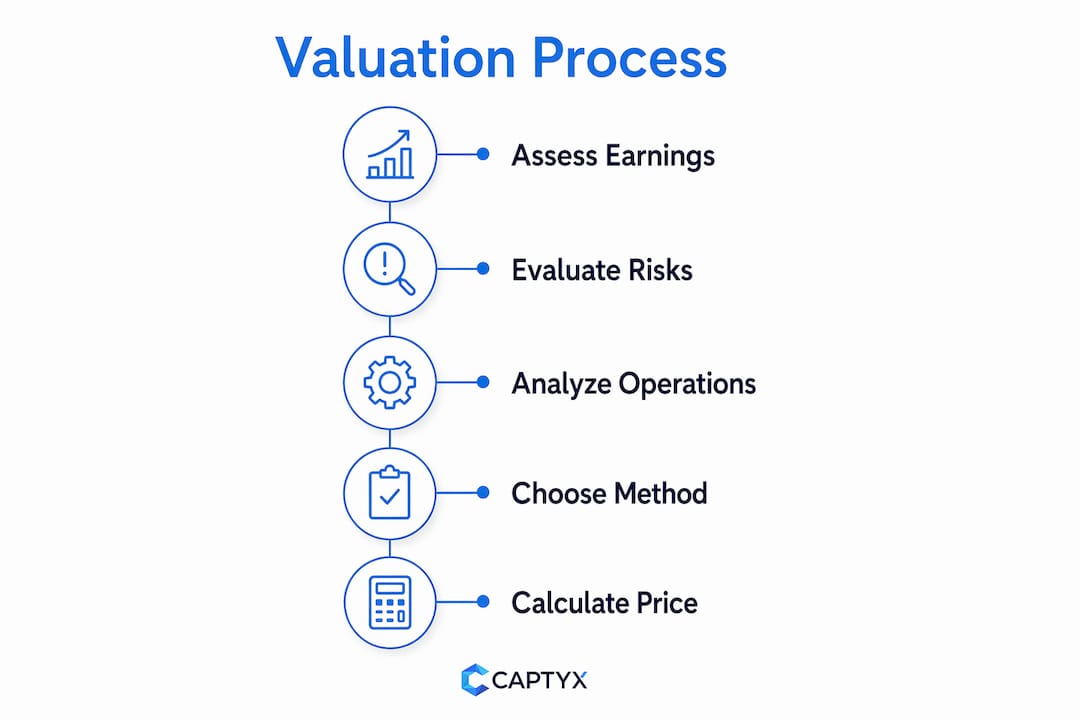
A business valuation is defined as an objective economic assessment that combines earnings, risk, and operational independence to estimate what a buyer is actually willing to pay. Buyers pay for what they get to keep after the owner walks away, not how hard the owner worked to build the business. That distinction is the single most important concept sellers must internalize before going to market.
Sellers who rely on gut feel or informal revenue multiples consistently misprice their businesses. Revenue is not value. A business generating $2 million in revenue with thin margins, one dominant customer, and an owner who handles every client relationship is worth far less than a $1.5 million revenue business with diversified clients, documented processes, and a management team in place. A formal appraisal forces that reality into focus before a buyer does it for you at the negotiating table.
The importance of business valuation extends to attracting the right buyers. Qualified buyers, especially private equity groups and strategic acquirers, arrive with their own valuation models. Walking in without a professional report signals inexperience and invites lowball offers. A credible, independently prepared valuation report sets the tone for every conversation that follows.
What factors determine a business valuation?
Sellers must understand the specific inputs that drive their number, because those inputs are also the levers they can pull to increase value before going to market.

Earnings measures form the foundation. Smaller businesses with under $1 million in earnings are valued on SDE, which stands for Seller’s Discretionary Earnings. Larger businesses are valued on EBITDA, which is earnings before interest, taxes, depreciation, and amortization. Using the wrong metric signals a misunderstanding of the market and confuses buyers immediately.
Risk factors are applied as discounts to those earnings. The three most damaging risk factors buyers price aggressively are:
- Customer concentration. When a single customer accounts for more than 20–30% of revenue, buyers discount the valuation by 20–40% to account for the risk of losing that relationship post-sale.
- Owner dependency. A business where the owner is the primary relationship holder, decision maker, or technical expert is viewed more like a job than a sellable asset.
- Industry trends. Declining industries or businesses with no clear competitive position face steeper discounts regardless of current earnings.
Valuation methods translate those risk-adjusted earnings into a price. The three standard approaches are income-based methods such as discounted cash flow, market comparables using recent sale multiples, and asset-based approaches. Income methods reflect future earning potential most reliably. Market comparables can lead to mispricing if the comparison set is poorly matched to your business size or industry.
Pro Tip: Never present revenue to a buyer as a proxy for value. Calculate your SDE or EBITDA first, then apply the appropriate multiple for your industry and size. That number is your starting point, not your revenue figure.
How does valuation help sellers close the value gap?
The value gap is the difference between what your business is worth today and what it could be worth with targeted preparation. Most sellers discover this gap only after a buyer’s due diligence team surfaces the risks. Getting ahead of it is the entire point of a pre-sale valuation.
Reducing owner dependency is the highest-return activity a seller can undertake before going to market. Buyers want a transferable, self-sustaining operation. Building that independence typically takes 12–18 months of deliberate effort, which is exactly why valuation should happen well before you plan to sell.
A structured approach to closing the value gap looks like this:
- Get an independent valuation. Establish your current baseline number with a qualified professional, not an online calculator or a broker’s informal estimate.
- Identify your top three risk factors. Customer concentration, owner dependency, and undocumented processes are the most common culprits.
- Delegate and document. Build a management layer, write standard operating procedures, and transfer client relationships to your team.
- Diversify your revenue base. If one customer represents more than 20% of revenue, actively reduce that concentration before listing.
- Revalue after improvements. A second valuation after 12–18 months of preparation quantifies the gains and gives you a stronger negotiating position.
Sellers who follow this process do not just get a higher price. They attract better buyers, face fewer contingencies, and close faster. An independent professional valuation is not optional for this process. Informal estimates from brokers or online tools do not carry the legal or negotiating weight that a formal report provides.
Pro Tip: Ask your valuation professional to identify the top three value drivers and the top three risk discounts in your report. Those six items are your pre-sale action plan.
What legal and tax benefits does a formal valuation provide?
A formal independent valuation functions as a legal safe harbor in IRS audits, court proceedings, and shareholder disputes. The IRS scrutinizes business sale transactions closely, particularly around purchase price allocations and gift or estate transfers. A defensible valuation prepared by a credentialed professional under AICPA standards significantly reduces your exposure.
The tax stakes are real. A formal independent valuation helps avoid IRS penalties of up to 40% of underpayments tied to valuation disputes. That penalty exposure alone justifies the cost of a professional report for most sellers.
Key legal and tax scenarios where a formal valuation is not optional:
- Purchase price allocation. How the sale price is divided among assets, goodwill, and non-compete agreements has direct tax consequences for both buyer and seller.
- Stock option plans and 409A compliance. Companies issuing equity must have a 409A valuation refreshed annually or after any material event to maintain legal defensibility.
- Divorce and shareholder disputes. Courts require independent valuations. An informal estimate will not hold up.
- Estate and gift transfers. The IRS requires a qualified appraisal for business interests transferred as gifts or through an estate.
“Refreshing valuations annually or after any material event is advised to keep numbers legally defensible and relevant for negotiations.”
Stale valuations create real risk. A number that was accurate 18 months ago may not reflect current earnings, market conditions, or operational changes. Sellers who rely on outdated reports face challenges from buyers, lenders, and tax authorities alike.
How to use valuation insights to maximize your sale proceeds
A valuation report is not just a number. It is a negotiating document, a preparation roadmap, and a credibility signal all at once. Sellers who treat it as a static figure miss most of its value.
Setting your asking price from a valuation multiple is the right starting point. Buyers in your market pay within a known range of multiples applied to SDE or EBITDA. Your valuation report anchors that conversation with data instead of emotion. Sellers who price above that range without a clear justification lose qualified buyers in the first week.
Walking into negotiations with a professional valuation shortens the deal timeline and improves seller credibility. An independent report removes the emotional conflict from price discussions and reduces the risk of deal collapse due to valuation disputes. Buyers trust numbers they did not generate themselves.
Use your valuation findings to prioritize improvements before listing. If the report shows that customer concentration is discounting your multiple by 30%, fixing that problem before going to market is worth more than any marketing effort. Buyers do not pay for owner effort. They pay for transferable earnings and stable, documented operations.
| Valuation insight | How sellers use it |
|---|---|
| SDE or EBITDA multiple range | Sets a defensible asking price aligned with market data |
| Customer concentration risk | Triggers revenue diversification before listing |
| Owner dependency score | Drives delegation and management team development |
| Operational documentation gaps | Prioritizes process documentation for due diligence |
| Growth opportunity flags | Supports premium pricing narrative with buyers |
Timing also matters. A valuation completed during a strong earnings period reflects your business at its best. Sellers who time their sale to coincide with peak performance and a favorable market environment consistently achieve better multiples than those who sell reactively.
Key Takeaways
A formal business valuation is the single most effective tool sellers have to set a credible price, reduce buyer risk discounts, and close transactions faster and at higher value.
| Point | Details |
|---|---|
| Valuation anchors price in reality | Sellers who price from a formal report attract qualified buyers and avoid lowball offers. |
| Risk factors drive discounts | Customer concentration above 20–30% and owner dependency can reduce value by 20–40%. |
| Legal protection is real | A defensible valuation shields sellers from IRS penalties of up to 40% of underpayments. |
| Preparation closes the value gap | Addressing top risk factors 12–18 months before listing directly increases the final sale price. |
| Timing and updates matter | Refreshing your valuation annually or after material changes keeps your number legally and commercially relevant. |
The misconception that costs sellers the most
Sellers almost universally believe that growing revenue is the fastest path to a higher sale price. It is not. Reducing risk and reducing owner dependency have a far bigger payoff per dollar of effort invested.
I have seen owners spend two years chasing revenue growth before a sale, only to watch a buyer discount the entire business because one customer represented 40% of that revenue. The revenue growth meant nothing. The concentration risk meant everything. That is the gap between what owners think drives value and what buyers actually price.
The emotional challenge is real. Your business is your identity, your income, and often your life’s work. Separating your personal effort from the business’s transferable value is uncomfortable. But buyers are not buying your story. They are buying a system that generates earnings without you in it.
The sellers I have watched close at the highest multiples all did one thing differently. They engaged a valuation professional early, accepted the findings without defensiveness, and spent 12–18 months fixing what the report identified. They did not argue with the number. They worked to change it.
Engaging Captyx or another qualified advisor before you are ready to sell is not premature. It is the only way to give yourself enough runway to act on what the valuation tells you. The sellers who wait until they are emotionally ready to exit are the ones who run out of time to prepare.
— Tucker
How Captyx helps sellers prepare for a stronger exit
Captyx has built the systems and formulas that most business brokers and M&A advisors use to prepare businesses for sale. Having sold over 225 businesses, including their own, Captyx brings real transaction experience to every valuation and advisory engagement.

Captyx provides independent business valuation services grounded in buyer feedback and market data, not guesswork. The firm identifies your value gap, quantifies your top risk discounts, and gives you a clear preparation plan to close that gap before you go to market. Sellers working with Captyx get a professional valuation report plus the advisory support to act on it. Start with a free valuation estimate to see where your business stands today, or explore the full M&A advisory services to understand how Captyx supports sellers from preparation through close.
FAQ
What is a business valuation for sellers?
A business valuation is a formal assessment of your business’s economic worth based on earnings, risk factors, and operational independence. It gives sellers a defensible asking price and a roadmap for increasing value before going to market.
Why do sellers need a valuation before listing?
Sellers need a valuation to set a price grounded in market data, attract qualified buyers, and avoid costly IRS penalties tied to unsupported price allocations. Without one, buyers control the price conversation.
What is the value gap in a business sale?
The value gap is the difference between what your business is worth today and what it could be worth after targeted improvements. Addressing customer concentration and owner dependency before listing are the two fastest ways to close it.
How often should a business valuation be updated?
Valuations should be refreshed annually or after any material event such as a major contract win, loss of a key customer, or significant earnings change. Stale numbers lose legal defensibility and negotiating power.
What is the difference between SDE and EBITDA in a valuation?
SDE, or Seller’s Discretionary Earnings, is the standard earnings measure for businesses under $1 million in earnings. EBITDA applies to larger businesses. Using the wrong metric signals inexperience to buyers and distorts your valuation multiple.


