


TL;DR:
- Investment banks manage the entire sell-side process for mid-market exits, from preparation to closing. Their expertise ensures deals are structured, marketed, and negotiated effectively to maximize value and protect confidentiality. Starting exit planning early improves valuation and reduces risks, while sector expertise and personal chemistry with advisors lead to better outcomes.
Investment banks are the primary architects of mid-market exits, managing every phase of the sale process from preparation through closing to maximize value for business owners. The role of investment banks in mid-market exits goes far beyond finding a buyer. These advisors structure the deal, run a controlled auction, manage due diligence, and negotiate the purchase agreement on your behalf. The industry term for this work is “sell-side M&A advisory,” and it covers a defined set of investment banking services that most mid-market owners cannot replicate on their own. Understanding what these advisors actually do, and when to engage them, is the difference between a well-run exit and one that falls apart at the finish line.
What is the typical sell-side process investment banks manage in mid-market exits?
The sell-side M&A process runs 8–12 months from the decision to sell through to deal closing. Each phase has a defined purpose, and investment banks own the execution of all of them.
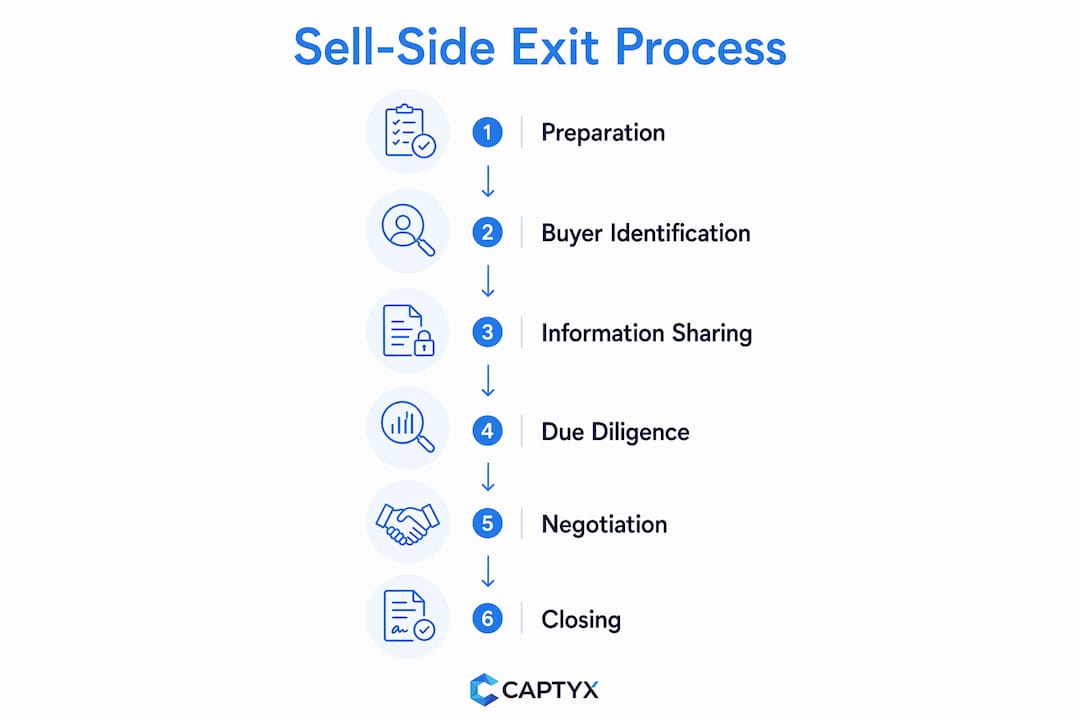
The six core phases break down as follows:
- Preparation (6–10 weeks). The bank builds the information memorandum, financial model, and buyer target list. This is where your business story gets shaped for the market.
- Marketing (2–4 weeks). The bank distributes the teaser and information memorandum to qualified buyers under confidentiality agreements. Buyer outreach is controlled and deliberate.
- Non-binding offers (4–6 weeks). Interested buyers submit indicative bids. The bank evaluates each offer against price, structure, and buyer credibility, then selects a shortlist for management presentations.
- Due diligence (6–10 weeks). The bank coordinates the data room, manages buyer access, and fields questions. This phase is where unprepared sellers lose value fast.
- Binding offers and SPA negotiation (3–6 weeks). Final bids come in, and the bank leads negotiation of the Share Purchase Agreement. Every clause affects your net proceeds.
- Closing (4–12 weeks). Regulatory approvals, financing confirmations, and final conditions are cleared. The bank keeps all parties moving toward the finish line.
Investment banks lead all seller-side activities, including buyer identification, information memorandum distribution, auction management, due diligence coordination, and SPA negotiation. That end-to-end ownership protects confidentiality and keeps deal momentum intact.
Pro Tip: Ask your bank how they plan to handle buyer questions during due diligence before you sign an engagement letter. Their answer tells you how organized and experienced they actually are.

Fee structures follow a standard pattern. Investment banks charge 1–3% of deal value in mid-market transactions, payable upon closing. That success-fee structure aligns the bank’s incentive directly with your outcome.
How do investment banks tailor mid-market exit strategies to buyers and market conditions?
There is no universal playbook for mid-market exits. Success depends on understanding buyer psychology and building a process around it. Investment banks that treat every deal the same consistently underperform those that adapt.
The most important distinction is between strategic buyers and financial sponsors. Strategic buyers, typically corporations in your industry, value your business based on synergies. They will pay a premium if your customer base, technology, or team fills a gap in their own operations. Financial sponsors, primarily private equity firms, focus on cash flow, growth potential, and management team quality. They are buying a platform or an add-on, and their valuation model is different. Understanding why mid-market businesses attract private equity investors is critical to positioning your business correctly before the process begins.
A skilled investment bank adjusts the following based on buyer type and market conditions:
- Auction format. A broad auction maximizes competitive tension but risks confidentiality. A targeted process with five to eight buyers protects your business while still creating competition.
- Information sequencing. What you reveal, and when, shapes buyer perception. Banks control the narrative by releasing financial detail in stages.
- Negotiation tactics. Strategic buyers need to see integration upside. Financial sponsors need to see a management team that can operate without the owner.
- Timing. Banks read market conditions and advise on whether to accelerate or delay based on credit markets, sector multiples, and buyer appetite.
Mid-market owners value advisors with sector expertise who align with goals beyond price alone, including speed and employee protection. The best banks ask what a successful exit looks like to you personally before they build the process.
Pro Tip: Tell your bank your non-negotiables on day one. If keeping your management team employed post-sale matters to you, that shapes which buyers make the shortlist.
Why should mid-market business owners start exit planning early with investment banks?
Early exit planning, starting 12–24 months before the sale, improves valuation and reduces late-stage deal risk. Most owners wait too long. Many mid-market owners start exit planning only when a buyer approaches, which increases risk and reduces deal success potential. Delayed planning produces inconsistent financial reporting and unprepared management teams, and those two problems kill deals in due diligence.
Early advisory relationships allow banks to help owners shape their companies in ways that attract higher valuations and smoother processes later. That is a compounding advantage. A business that has spent 18 months cleaning up its books, reducing customer concentration, and building a second-tier management team commands a materially higher multiple than one that enters the market unprepared.
The specific areas investment banks help you address during the preparation window include:
- Financial reporting quality. Audited or reviewed financials, clean EBITDA adjustments, and normalized working capital calculations all reduce buyer risk and support price.
- Customer concentration. A business where one customer represents more than 20% of revenue is a red flag for buyers. Banks identify this early and help you diversify before marketing.
- Management team depth. Buyers want to know the business runs without you. Banks assess your team and advise on hires or promotions that improve buyer confidence.
- Exit structure options. Whether you want a full sale, a partial sale, or a recapitalization affects which buyers you target. Banks map out the options and their tax and financial implications.
- Business readiness signals. Reviewing signs your business is sale ready before engaging a bank gives you a head start on the preparation process.
Starting early also gives you time to address the common mistakes that derail business sales before they become deal-killers in front of buyers.
What are common challenges in mid-market exits and how do investment banks help?
Mid-market exits fail for predictable reasons. Investment banks exist, in part, to prevent those failures. The most frequent challenges owners face include valuation disputes, buyer financing uncertainty, management retention concerns, and confidentiality breaches. Each one is manageable with the right advisor in place.
Investment banks serve as a “safe pair of hands” for middle-market owners by managing complex negotiations, maintaining confidentiality, and building trusted buyer relationships. That trust-building function is underrated. Buyers who trust the process move faster and are less likely to retrade on price after due diligence.
The specific ways banks mitigate common exit challenges:
- Valuation disputes. Banks prepare detailed valuation analyses using comparable transactions and discounted cash flow models. When a buyer pushes back on price, the bank defends the number with data.
- Buyer financing risk. Banks qualify buyers early and track financing progress throughout the process. They will not let an unfinanced buyer consume six weeks of due diligence.
- Confidentiality protection. All buyer outreach happens under a non-disclosure agreement. The bank controls who sees what and when, protecting your employees, customers, and competitors from learning about the sale prematurely.
- Management retention. Banks advise on retention packages and equity rollover structures that keep key people committed through closing and beyond.
- Deal timing. Banks monitor market conditions and advise on whether to push forward or pause based on credit availability and sector sentiment.
Pro Tip: Before signing with any advisor, ask for three references from mid-market deals they closed in your sector in the last two years. Sector-specific experience is not optional.
Understanding how business valuation affects your sale is one of the most practical steps you can take before engaging an investment bank.
Key Takeaways
Investment banks in mid-market exits deliver the most value when engaged early, given a clear mandate, and selected for sector-specific experience rather than brand name alone.
| Point | Details |
|---|---|
| Sell-side process timeline | The full process runs 8–12 months across six defined phases from preparation to closing. |
| Fee structure | Investment banks charge 1–3% of deal value, payable on closing, aligning their incentive with your outcome. |
| Buyer type matters | Strategic and financial buyers value businesses differently; your bank must tailor the process to each. |
| Start planning early | Beginning exit preparation 12–24 months ahead improves valuation and reduces due diligence failures. |
| Banks manage risk | Advisors protect confidentiality, qualify buyers, and defend valuation when deals face pressure. |
What I’ve learned about picking the right investment bank for a mid-market exit
Most mid-market owners spend more time choosing their accountant than choosing their M&A advisor. That is a mistake with real financial consequences.
The single biggest differentiator I have seen is sector expertise. A bank that has closed five deals in your industry in the last three years knows which buyers are active, what multiples are realistic, and where due diligence gets difficult. That knowledge shortens the process and protects your price. A generalist bank with a strong brand name but no sector depth will run a competent process and still leave money on the table.
The second thing owners consistently underestimate is the importance of chemistry. You will spend 9–12 months working closely with this team under significant pressure. The senior banker who pitches you needs to be the one running your deal, not handing it to a junior associate after the engagement letter is signed. Ask that question directly before you commit.
The third observation is this: the best advisory relationships start before the formal process. Banks that spend time understanding your business, your goals, and your personal financial situation before marketing begins produce materially better outcomes. That preparation time is not billable. It is an investment the bank makes because they believe in the deal. If a bank wants to skip straight to the pitch book, that tells you something.
— Tucker
How Captyx supports mid-market business owners through the exit process
Captyx has built the systems and processes that most M&A advisors use to prepare businesses for sale, and has applied them across more than 225 completed transactions.

For mid-market owners who want to exit at full value, Captyx provides advisory services covering valuation, management team strengthening, financial reporting preparation, and confidential buyer outreach. The firm’s approach is built on real-time buyer feedback, which means your business gets refined based on what actual buyers say, not what an advisor assumes they want. If you are thinking about an exit in the next one to three years, the right time to explore Captyx’s M&A advisory services is now, before the market comes to you. You can also get a free business valuation estimate to understand where your business stands today.
FAQ
What does an investment bank do in a mid-market exit?
An investment bank manages the full sell-side process, including buyer outreach, auction management, due diligence coordination, and SPA negotiation. Their role is to maximize sale price while protecting confidentiality and managing deal risk throughout the 8–12 month process.
How much do investment banks charge for mid-market M&A advisory?
Investment banks typically charge 1–3% of deal value in mid-market transactions, with fees payable upon closing. The success-fee structure means the bank earns more when you do.
When should a mid-market owner engage an investment bank?
Owners should engage an investment bank 12–24 months before their target sale date. Early engagement allows the bank to help address financial reporting gaps, customer concentration, and management team depth before the business goes to market.
What is the difference between a strategic buyer and a financial sponsor?
A strategic buyer is a corporation that values your business based on operational synergies with its own operations. A financial sponsor, typically a private equity firm, values your business based on cash flow, growth potential, and management team quality. Investment banks tailor the sale process differently for each buyer type.
How do investment banks protect confidentiality during a sale?
Investment banks require all buyers to sign a non-disclosure agreement before receiving any business information. They control the release of sensitive data through a staged process, ensuring employees, customers, and competitors do not learn about the sale prematurely.


