


TL;DR:
- Approaching business owners with short, respectful, and value-focused outreach opens meaningful conversations rather than rushing into a sale.
- Building trust requires research, owner-centered language, and a disciplined sequence of communication, avoiding early financial disclosures.
- Effective sales discussions emphasize understanding the owner’s goals and timing while controlling information flow to maximize final valuation.
The most effective way to approach a business owner about selling is through short, respectful, value-focused outreach that opens a conversation rather than closes a deal. Most sellers receive generic acquisition pitches daily and delete them without reading past the first line. The owners who respond are the ones who feel heard, not sold to. Firms like Captyx and advisors such as Larry Chester at CFO Simplified have built entire frameworks around this principle. Get the opening right, and everything else follows.
How to approach business owner about selling: mindset first
The single biggest mistake buyers and advisors make is treating the first contact as a sales call. It is not. Your job in the first interaction is to evaluate whether this owner is even a candidate, not to convince them of anything.

Before you reach out, research the business thoroughly. Know the industry, the approximate revenue range, and any public signals of owner readiness, such as aging leadership, stagnant growth, or recent management changes. These details shape every word you write.
Preparation checklist before first contact:
- Identify the owner’s likely motivation: retirement, burnout, growth capital, or a strategic exit
- Review public financial signals: revenue trends, employee count changes, and online reviews
- Prepare three to five diagnostic questions to ask during the first conversation
- Decide what you will not share early, specifically detailed financials or valuation expectations
Pro Tip: Treat the first conversation as a buyer interview, not a pitch. Your goal is to learn whether this owner is ready, willing, and able to sell, not to convince them to do so.
Valuation and sale preparation often takes 12–24 months for sellers who want a fast, high-value outcome. That timeline means many owners you contact today are not ready yet, but they will be. Building the relationship now pays off later.
What does an effective initial outreach message look like?
The format and length of your first message matters more than most people realize. Short, problem-focused messages of 50–90 words consistently outperform long, generic pitches. Busy owners scan their inbox in seconds. If your message does not earn attention in the first two sentences, it is gone.
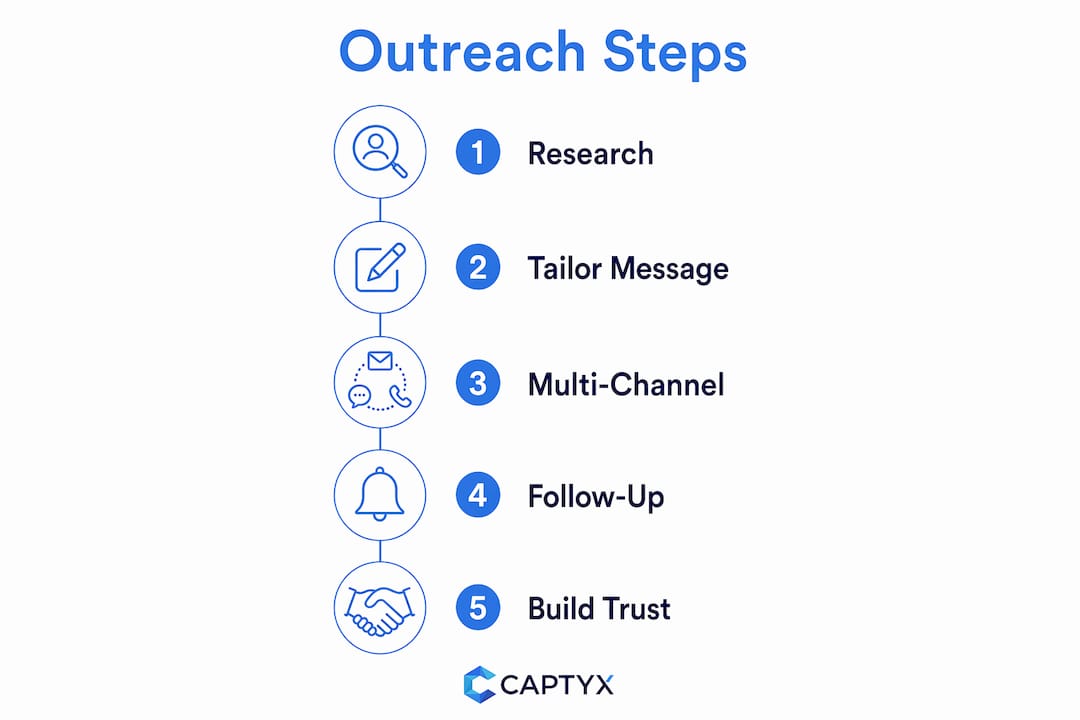
Here is a proven sequence for reaching a business owner across multiple channels:
- Email, Day 1. Lead with a specific observation about their business or industry. Mention one concrete insight, not a compliment. Keep it under 80 words.
- LinkedIn message, Day 4. Reference the email briefly and add a different angle, such as a recent industry shift or a relevant peer example. Do not repeat the same message.
- Phone call, Day 8. Leave a voicemail of 20–30 seconds. State your name, your firm, and one clear reason why you are calling this specific owner.
- Email follow-up, Day 14. Offer something of value: a market report, a valuation range for their sector, or a brief case study. Ask one direct question.
- Final touch, Day 21. Keep it brief. Acknowledge their time and leave the door open without pressure.
A 5-touch message sequence with varied angles significantly improves response rates from business owners. The key word is varied. Sending the same message five times signals low effort and kills credibility.
Pro Tip: Never open with “I’m interested in acquiring your business.” Open with a specific observation: “I noticed your firm has grown its service footprint in the Southeast over the past two years. I work with owners in that space who are thinking about their next chapter.”
Strong opening lines reference something real. Weak ones reference you.
How do you build trust after the first response?
Getting a reply is not the finish line. It is the starting line. The conversation that follows determines whether this owner becomes a serious seller or goes cold.
Receiving a buy inquiry is a business move, not a compliment. Experienced owners know this. They will test your seriousness, your knowledge, and your respect for their time before they share anything meaningful.
Shift from pitch mode to consultative mode immediately. Ask about the owner’s goals, timeline, and current challenges. Listen more than you talk. The questions you ask signal your sophistication far more than any credential you list.
Owner-centric language that builds trust fast:
- Reference EBITDA, cash flow, and valuation multiples rather than vague terms like “synergies” or “strategic fit”
- Ask about their post-sale vision: “What does life look like for you two years after a transaction?”
- Use peer examples: “We recently worked with a similar firm in your sector that achieved a 6x EBITDA multiple by addressing one operational gap before going to market”
- Present options with clear trade-offs rather than a single recommendation
“Advisors lose deals by speaking in abstract frameworks. Owner-centric language focusing on financial impact leads to faster trust and faster decisions.” — Danish Lead Co.
Messaging that focuses on concrete financial outcomes resonates better and builds more trust with owners than abstract synergy talk. Owners think in dollars and multiples. Meet them there.
When should you discuss financials and deeper buyer evaluation?
This is where most sellers and their advisors give away leverage without realizing it. The moment you share detailed financials before a buyer has proven their seriousness, you hand them the upper hand in every subsequent negotiation.
The standard timeline for selling a small business runs 9–12 months from first engagement to close, with due diligence alone consuming 6–12 weeks. That timeline gives you room to be deliberate about what you share and when.
| Stage | What to Share | What to Withhold |
|---|---|---|
| First contact | Industry knowledge, general interest | Financials, valuation expectations |
| Qualified conversation | Business overview, general revenue range | Detailed P&L, customer concentration |
| Letter of Intent signed | Full financials, customer data | Legal liabilities, pending disputes |
| Due diligence | All requested documentation | Nothing, with legal protections in place |
Answering buyer questions too early risks losing leverage and eroding your final valuation. Use what advisors call “Deferral Language” to stay in control. Phrases like “We’ll organize that before sharing” or “That’s something we address once we’ve confirmed mutual fit” keep you in Question Mode without sounding evasive.
Before sharing anything sensitive, evaluate the buyer on three dimensions: their acquisition history, their valuation methodology, and their stated timeline. A buyer who cannot explain how they value businesses or who has never closed a deal is not a serious counterpart yet.
Pro Tip: Ask every prospective buyer: “Can you walk me through how you’ve valued and structured your last two acquisitions?” Their answer tells you everything about whether they are a tire-kicker or a real buyer.
What are the biggest mistakes when approaching owners about a sale?
Even experienced advisors make avoidable errors when they discuss selling a business with an owner. The mistakes below consistently kill deals or reduce final sale prices.
| Mistake | Why It Costs You | Better Approach |
|---|---|---|
| Sharing financials too early | Gives buyers pricing leverage before commitment | Use Deferral Language until LOI is signed |
| Generic outreach messages | Owners delete them immediately | Personalize every message with a specific observation |
| Abstract language like “synergies” | Signals you do not understand their business | Use EBITDA, cash flow, and multiples instead |
| Responding too fast to every request | Creates perception of desperation | Set a deliberate pace and stick to it |
| Ignoring message sequencing | Single-touch outreach rarely converts | Use a 5-touch multi-channel sequence |
Strategic messaging focused on value and permission-based outreach consistently outperforms hard-sell tactics. Owners are not waiting to be convinced. They are waiting to be understood.
One more mistake worth calling out: failing to tailor your outreach to the owner’s specific motivation. A 62-year-old founder planning retirement needs a completely different conversation than a 45-year-old operator looking for growth capital. Know which conversation you are walking into before you send the first message. Resources like the Captyx blog offer detailed guidance on reading seller signals and tailoring your approach by business type and owner profile.
Key takeaways
The most effective approach to discussing a business sale combines deliberate preparation, owner-centric language, and disciplined information control at every stage.
| Point | Details |
|---|---|
| Prepare before first contact | Research the owner’s motivation and business signals before writing a single word. |
| Keep outreach short and specific | Messages of 50–90 words with a concrete observation outperform long generic pitches. |
| Use a multi-touch sequence | A 5-touch sequence across email, LinkedIn, and phone raises response rates significantly. |
| Control financial disclosures | Share detailed financials only after a Letter of Intent is signed and buyer seriousness is confirmed. |
| Speak in owner-level language | Reference EBITDA, cash flow, and valuation multiples to build trust faster than abstract frameworks. |
What i’ve learned from watching sellers lose deals they should have won
I have watched sellers walk away from transactions worth millions less than they deserved, and the reason is almost never the business itself. It is the conversation that preceded the deal.
The most common pattern I see: a seller gets excited when a buyer shows interest, starts answering every question immediately, shares financials before any commitment is made, and then watches the buyer use that information to chip away at the price during due diligence. By the time they realize what happened, the leverage is gone.
The mindset shift that changes everything is this: you are not trying to sell your business. You are evaluating whether this buyer deserves to buy it. That single reframe changes how you answer questions, how you pace disclosures, and how you show up in every conversation.
Multi-channel outreach is also underused by sellers who initiate contact. Most people send one email, hear nothing, and assume the owner is not interested. In reality, the owner may have been traveling, distracted, or simply not ready that week. A well-sequenced follow-up with a fresh angle is not pushy. It is professional.
The owners who get the best outcomes are the ones who treat every conversation as a strategic planning session. They know their numbers, they know what they want post-sale, and they know exactly how much they are willing to share and when. That preparation is not accidental. It is built deliberately, often with experienced advisors who have been through the process before.
If you are thinking about selling your business, start the preparation long before you start the conversations.
— Tucker
How Captyx helps you approach the sale conversation right
Captyx has sold over 225 businesses, including businesses its own team has owned and operated. That experience is the foundation of every advisory engagement.

When you work with Captyx, you get the systems and frameworks that most business brokers and M&A advisors use to prepare businesses for sale at optimal value. From crafting your initial outreach strategy to managing buyer conversations and controlling information flow, Captyx provides real-time feedback at every stage. Whether you want to understand your current business valuation or need full M&A advisory support, Captyx builds the process around your goals. Explore Captyx M&A advisory services to see how the right guidance changes your outcome.
FAQ
How do i start a conversation about buying a business?
Lead with a specific observation about the owner’s business or industry rather than a direct acquisition offer. Keep your first message under 90 words and focus on opening a dialogue, not closing a deal.
What is the best channel to approach a business owner?
Email, LinkedIn, and phone calls each work best in sequence rather than isolation. A 5-touch multi-channel sequence with varied angles produces significantly higher response rates than any single channel alone.
When should i disclose financials during a sale discussion?
Share detailed financials only after a Letter of Intent is signed. Early financial disclosure gives buyers pricing leverage before they have made any commitment, which reduces your final sale value.
How long does it take to sell a small business?
The typical timeline runs 9–12 months from first engagement to close, with due diligence taking 6–12 weeks. Sellers who prepare 12–24 months in advance consistently achieve better prices and smoother transactions.
What language works best with business owners?
Owner-centric language referencing EBITDA, cash flow, and valuation multiples builds trust faster than abstract terms. Concrete financial outcomes resonate more than frameworks or synergy-focused messaging.


